




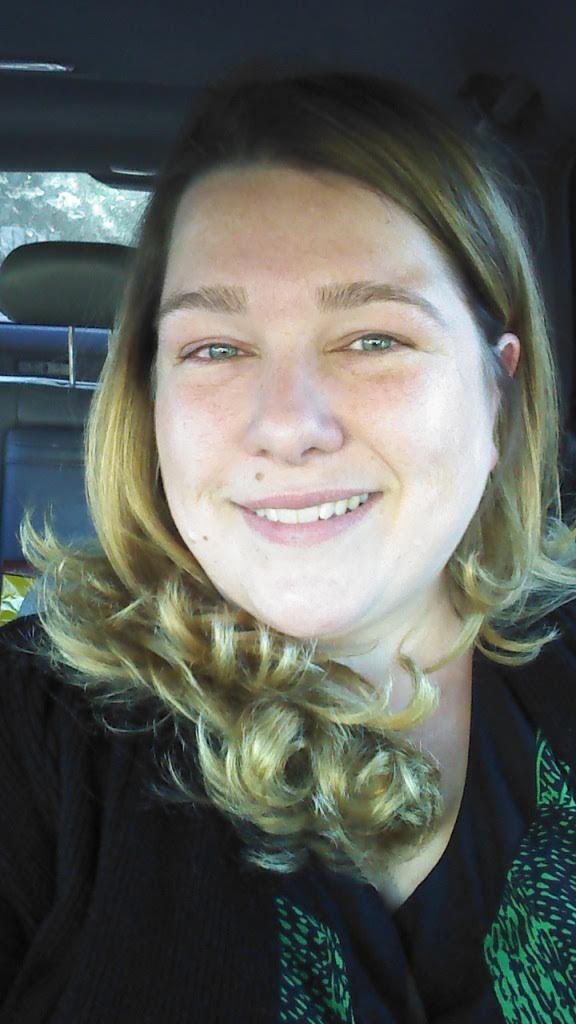
2014 – new hairdo making me feel normal again
ORIGINAL STORY PUBLISHED JANUARY 2014 – CLICK HERE TO READ
This update picks up 12-13 years after my first story was published in a CSRF newsletter. At that time I was a little less than a year out from surgeries that were only partly successful. I was married and my kids were 6 and 17. Today those kids are 18 (rising Sophomore at UGA) and 30 (running a veterinary business). Though I was still married at that time, things were starting to strain and we were spending more and more time apart.
For the next two years after the earlier story ends, I saw improvements but no real resolution of symptoms, no full return to healthy normalcy, whatever that was. I still carried a lot of weight, had disruptive sleep problems, and my marriage became even rockier. Today I’m quite happy to not be married so obviously there was something in it for me too even if it was non-consensual at the time.
I officially recurred sometime in late Fall 2015, about three years out from my first surgery. At the same time, my family was preparing for a three-week trip to India with a stop in Europe on the way back to the US. I was anxious, having trouble staying asleep, and gaining weight, plus a familiar greasy sweaty feeling was coming back to my body. BUT we were about to go on the opposite side of the globe, there was stress of the logistics, etc etc. Lots of excuses but I think I really did know that it was back and determined to ignore it for the sake of the trip. The clothes I wore at the start did not fit in the end. I had a couple of nights I did not sleep at all. I felt like I was losing it a little bit, doing weird things and feeling a lot of anxiety like something really bad was going to happen, carrying that all the time, while also sweating constantly and heavily in 100+ degree December weather in Chennai, India. Which is a beautiful, mesmerizing, delicious, and exciting place, but damn it I was going a little insane too.
bizarre behavior as Cushing’s returned end of 2015
We returned home in early January 2016 and tests proved I was in recurrence about a week later. I was not a candidate for surgery so agreed to radiation and medication – I started Korlym the same week as the radiation, and I chose it because for me it would be the most potent option that would address the diabetes too. Within a couple of weeks I started losing weight and most of my disruptive symptoms resolved – sleep issues, outward anxiety and anger, etc – but fatigue and a sort of persistent cloud of emotional darkness seemed to permeate my life instead. My marriage was actively dissolving through 2016 and 2017, but I was also taking on more responsibility at CSRF, where I’d been volunteering for more than two years. That part felt good and helped to tolerate the other.
I’m going to snowplow through two years of painful details and generally say that facing divorce while still recovering from radiation, with a credit score long ignored in favor of super charging his, no job, and spotty work history due to illness and child raising, was daunting. His actions made the terms most favorable to me, but how was I going to somehow in one year get it all together to qualify for a mortgage in my own name to take over the house? Nevermind the concept of dipping back into the dating pool with ongoing chronic issues and this post-Cushing’s body at age 41!
The year I got divorced – 2018 – was the year I became President of CSRF. I had three years of COBRA after divorce, so 2019-2021. I decided to give it everything I had to see what I could do as a volunteer to create something that could grow and bring on paid employees and keep growing. If I couldn’t find a way to get hired to do this as a job, I’d have to get a job before the COBRA ran out.
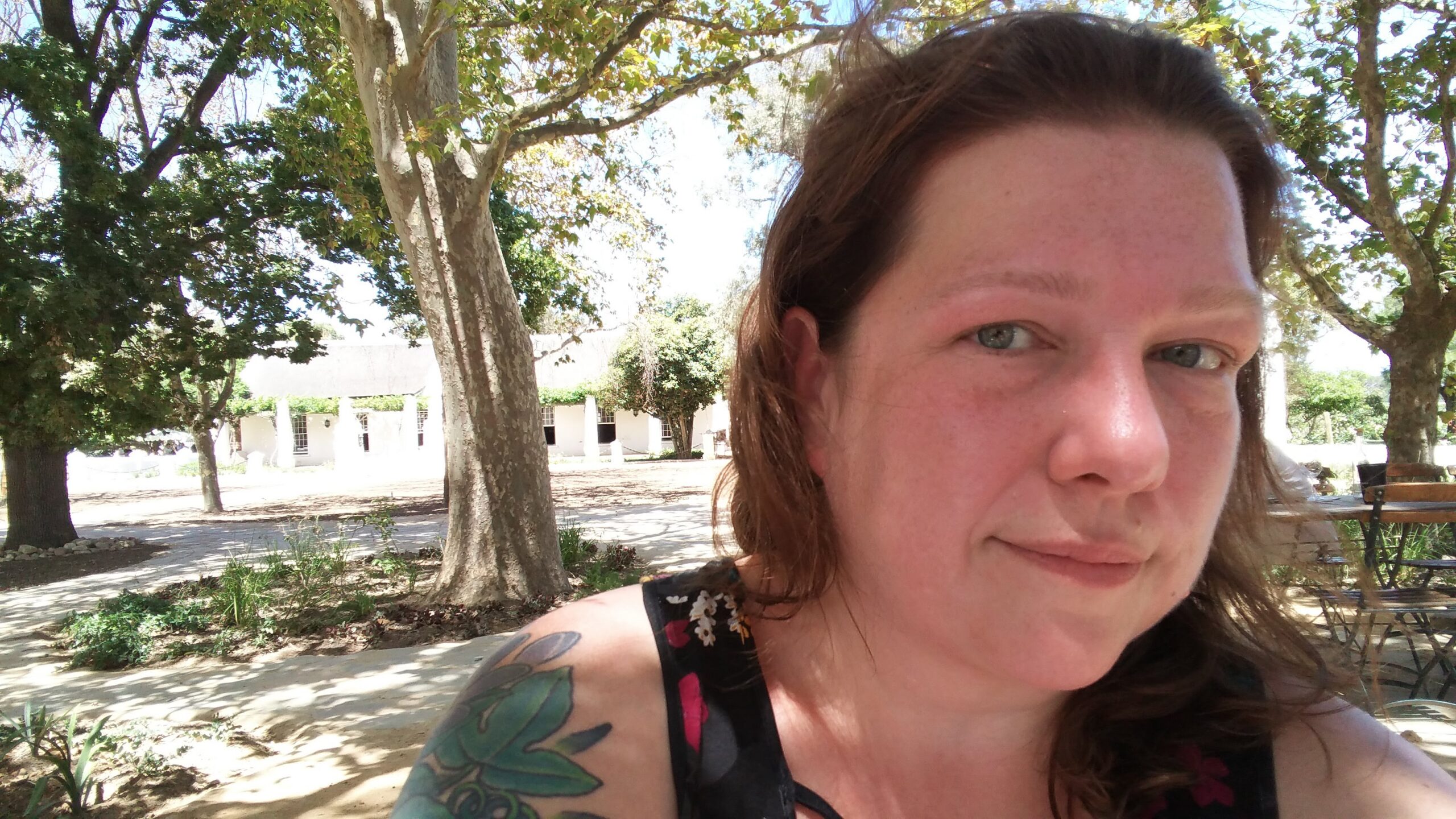
2018 – starting to see myself again
2018 is also the year I came off the Korlym, about 18 months after starting treatment. My radiation oncologist had said that it could take 3-5 years to begin to benefit from the radiation, with the full effect taking up to 10 years. But at that 18 month mark my symptoms were under good enough control that they didn’t come flooding back, so I stayed off the medication and continued to heal over the years. I think 2022 is when I feel most strongly that the effect of high cortisol expired in me.
I’ve had several adrenal crises over a dozen years, so the average looks good on paper…but I’ve been dangerously unprepared each time, and have wasted hours or even days gaslighting myself that it’s anything other than what it is. Even though I do not have my pituitary gland anymore, the remaining tumor is still secreting enough ACTH to tell my adrenals to make a low or average level of cortisol (5-13 on AM serum). The current plan requires fingers crossed that this never changes and involves occasional low dose dexamethasone suppression tests to make sure hypercortisolism isn’t creeping back in. I think there are some details about my case that cannot yet be addressed in a clinical or even academic setting, though I’d love to see a study with 100 or more participants who had complete pituitary removal during treatment and are at least 10 years out from surgery. Maybe it exists and I just haven’t checked yet!
Some of the lifelong implications of panhypopituitarism that seemed too big to comprehend in the beginning are almost unnoticeable today. I still take desmopressin for diabetes insipidus (aka AVP-D), Synthroid for my thyroid, and lisinopril for high blood pressure. My brain fog and difficulty concentrating led me to a psychiatrist for evaluation and treatment of an ADD-like deficit, and that’s been very helpful. At times over the years I have taken estrogen and progesterone, but the latter makes me feel so sick I’d just rather not. Though there are many benefits for “a woman my age” (currently 48) to take estrogen, there are also plenty of good reasons to stay off of it. I took growth hormone injections for awhile and felt better generally, but it’s too expensive for me to stay on long-term and the companies who make it have recently changed their co-pay assistance programs that all but cut out adults. Whatever!
This whole experience has hardened me and made me cynical. I’m quick to dismiss or even mock things that used to hurt or bother me. I’ve learned a lot about personal boundaries and consent, and it’s helped to put me in the driver’s seat of my own life. At the same time, I’m more empathic, scientifically inquisitive, and determined to bring change and positivity to people who feel isolated, marginalized, and powerless….in medical situations and otherwise. It makes me feel good to help people feel better than they did before we met. My job involves creating safe spaces for people to express themselves and be believed, and helping them design action plans that hopefully lead to needed results. This work is like therapy.
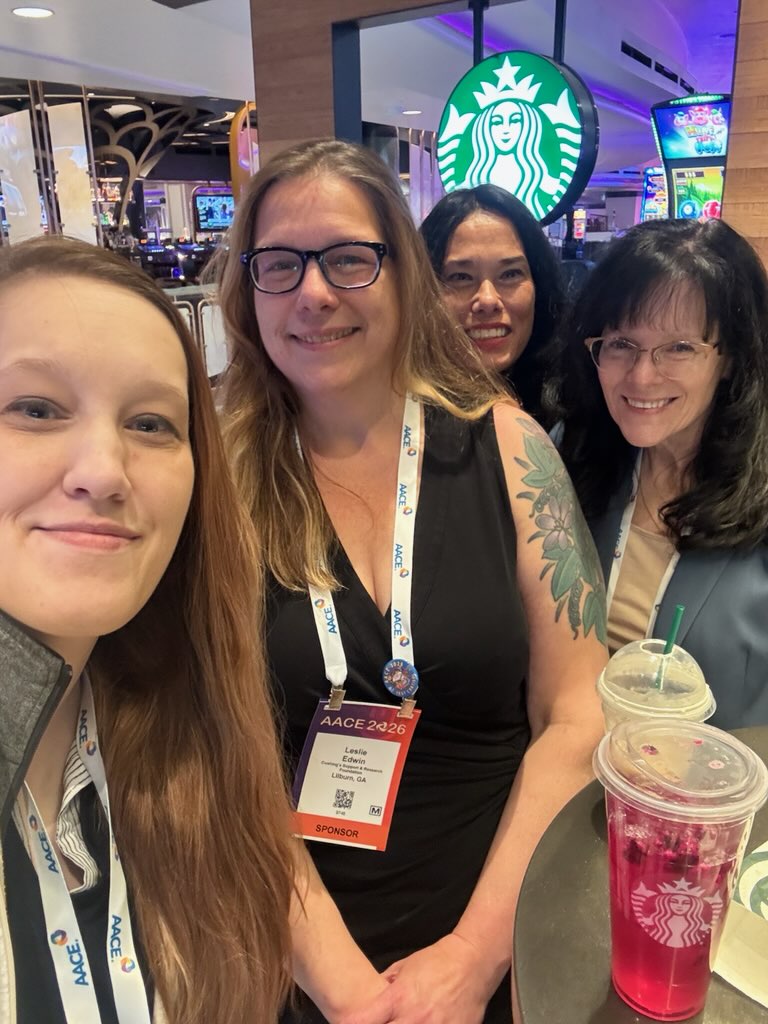
acting like a coffee ad with conference homies – AACE2026
Running CSRF will always be one of the biggest privileges of my life. A big part of what drives my thought processes is how we all wish we had experienced the discovery and progression of this disease. When patients get together for a meeting or a support call, what’s really happening is a diverse representation of masters talking about the best ways to address chronic problems that fall through the cracks due to underreporting, miscommunication, and misperceptions. We’ve played key roles in advancing the understanding of this disease by sharing our stories and speaking out on behalf of our community in other ways. Physicians, researchers, industry, and others pretty much can’t operate in this space without finding out about CSRF, in part because we support them too.
The clinical story is solid by now, and it’s good to see new research building on initial findings. It’s legacy-level stuff for us to run a Registry collecting unique data and then publish it. It is extremely satisfying to see decades of hard work finally paying off. I wish some of the people we’ve lost along the way could be present for the swift changes that are coming.